



When news broke that malicious code had appeared on websites associated with 178 organizations—including major brands across financial services, technology, media, retail and other industries—the immediate reaction was predictable:
“How could so many organizations be hacked at once?”
But that may be the wrong question.
The organizations were not necessarily breached individually. Instead, attackers compromised code hosted through Optimizely, a widely used website experimentation platform. Websites that depended on those scripts could then unknowingly serve the malicious code to their own visitors.
That distinction matters.
It illustrates one of the most important cybersecurity realities facing organizations today:
You can have strong security controls inside your organization and still be exposed through technology you trust outside it.
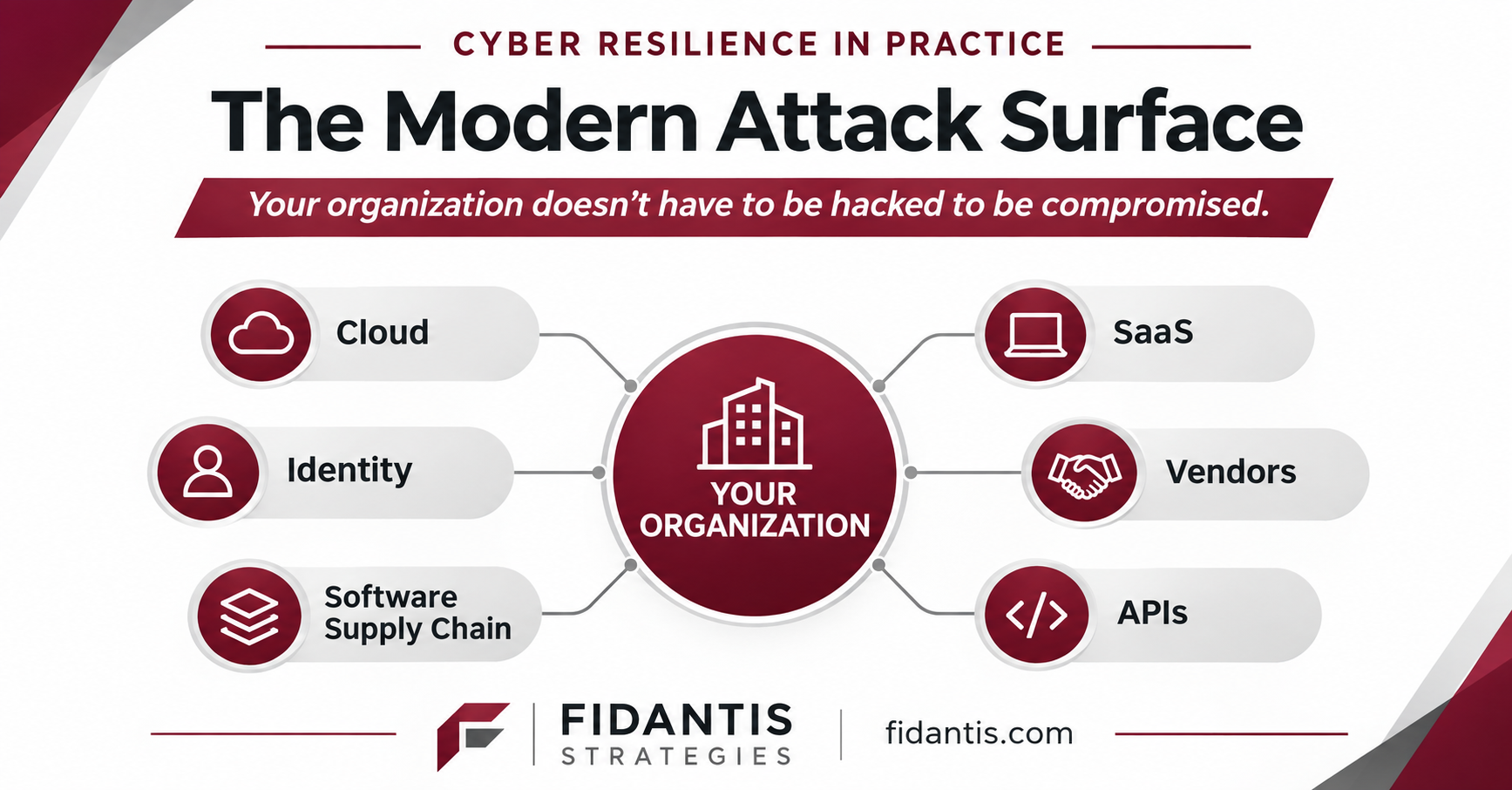
Organizations increasingly rely on an interconnected ecosystem of:
Every dependency can improve efficiency.
Every dependency can also become part of the organization’s risk profile.
The traditional security model focused heavily on protecting the organization’s perimeter. But in a cloud- and SaaS-driven environment, the perimeter has become increasingly difficult to define.
Your organization may not own the infrastructure.
You may not control the software.
You may not even know every dependency running behind a business application.
Yet your customers and regulators will still expect you to understand and manage the risk.
Most organizations would never knowingly allow an outside developer to deploy unreviewed software directly onto a production server.
Yet modern websites routinely load scripts from external providers.
If one of those providers is compromised, the browser may execute malicious code as though it were part of the organization’s own site.
That means organizations should understand:
If nobody can answer those questions, there is already a governance problem.
One of the most interesting lessons from this incident is that some organizations were reportedly protected by browser security controls that prevented portions of the malicious code from operating.
That demonstrates an important cybersecurity principle:
Security should not depend entirely on preventing the initial compromise.
Layered controls should limit what happens when something trusted becomes malicious.
Examples include:
The objective is to reduce the blast radius.
Many incident-response plans still focus almost entirely on internal technology.
Who responds if Microsoft 365 is compromised?
What happens if your payroll provider goes offline?
Who makes the decision to disconnect a third-party website service?
What if your cloud identity provider becomes unavailable?
Can your organization operate if a critical SaaS platform fails for 24, 48 or 72 hours?
These are no longer theoretical questions.
Organizations should include critical vendors in their incident-response, business-continuity and cyber-recovery planning.
You don’t need another cybersecurity product to begin addressing this risk.
Start with seven questions:
Create an inventory—not merely of vendors, but of the systems and business processes dependent on them.
Prioritize them according to operational impact.
Include website components, APIs, browser scripts, plugins and software libraries.
Determine whether the organization actually knows how.
Document the operational workaround.
A recovery plan that has never been exercised is an assumption.
Executives and boards should know the organization’s realistic recovery time—not simply whether backups exist.
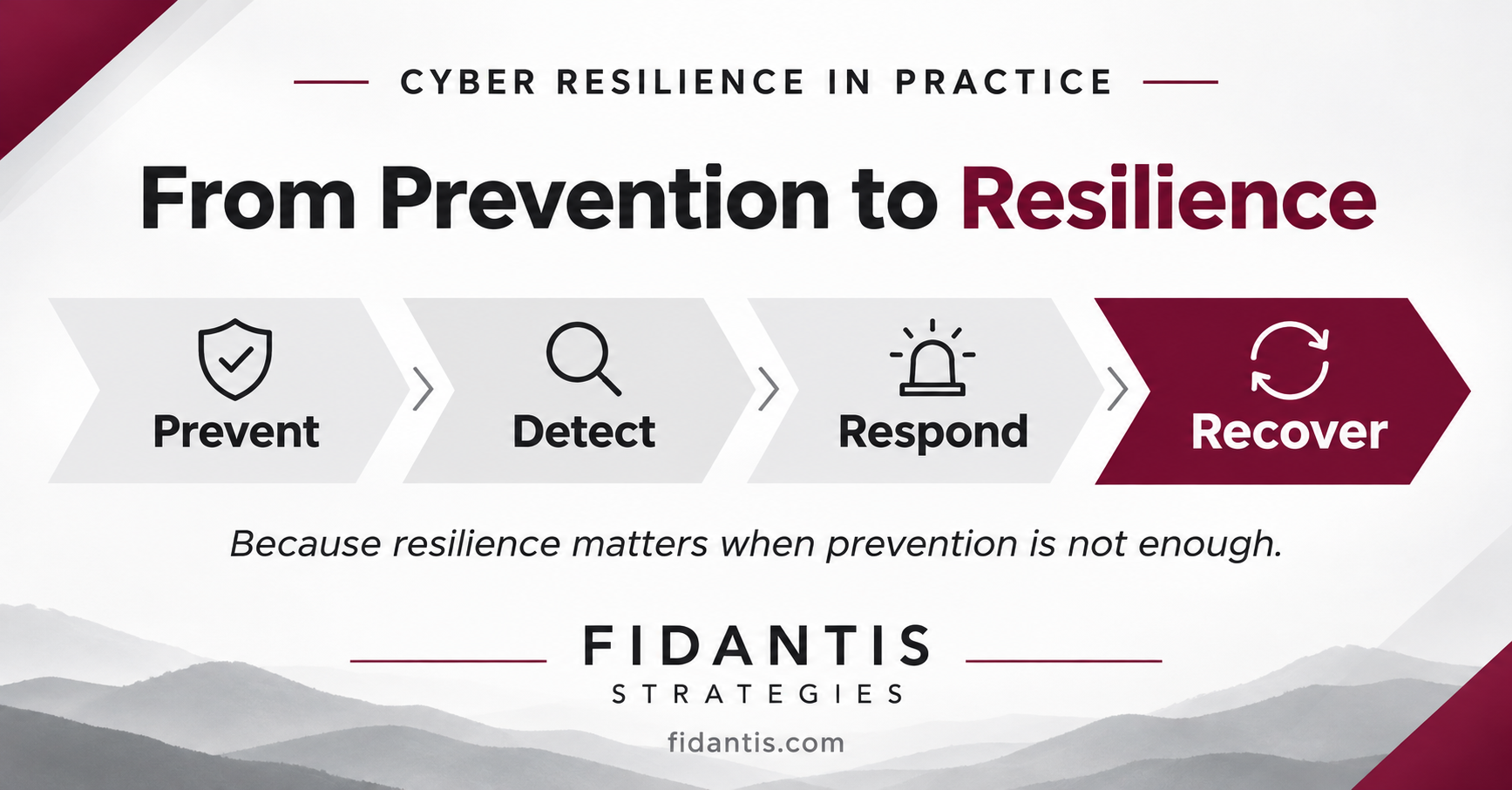
The industry has understandably invested enormous effort in preventing attacks.
Prevention remains essential.
But organizations also need to plan for a more uncomfortable reality:
Systems will fail.
Vendors will experience incidents.
Credentials will be compromised.
Software will contain vulnerabilities.
Cloud services will experience outages.
And occasionally, trusted technology will become the delivery mechanism for an attack.
The question therefore cannot simply be:
“Can we prevent a cyberattack?”
A more useful question is:
“If something we depend on is compromised or unavailable tomorrow, can we continue operating—and can we recover confidently?”
That is the foundation of cyber resilience.
Cybersecurity, governance, business continuity, and recovery should not be treated as separate disciplines. Organizations do not need perfect security. They need visibility into their critical risks and dependencies, controls that limit the impact of failure, and a tested ability to recover.
Start by identifying your five most critical technology dependencies and asking what happens to the business if each one becomes unavailable tomorrow.
The answers may be more valuable than another security dashboard.
Fidantis Strategies helps organizations assess cyber risk, strengthen governance and security controls, and develop practical disaster and cyber-recovery capabilities. Learn more at fidantis.com.
Source: Optimizely’s November 2026 security advisory